


Mathematics
Intent
We believe that everyone can do Maths; Maths is a subject that everyone should be able to perform confidently and competently. To enhance the schemes of learning from White Rose and the Mastering Number programme, teachers use a range of materials which may include Power Maths, Teach Active and the NCETM spine materials.
At The Oaks, we see teaching for Mastery in Maths as allowing the children to gain a deep understanding of the content, allowing them to acquire a secure and long-term understanding of Maths that allows them to make continual progress to move on to more complex topics.
Implementation
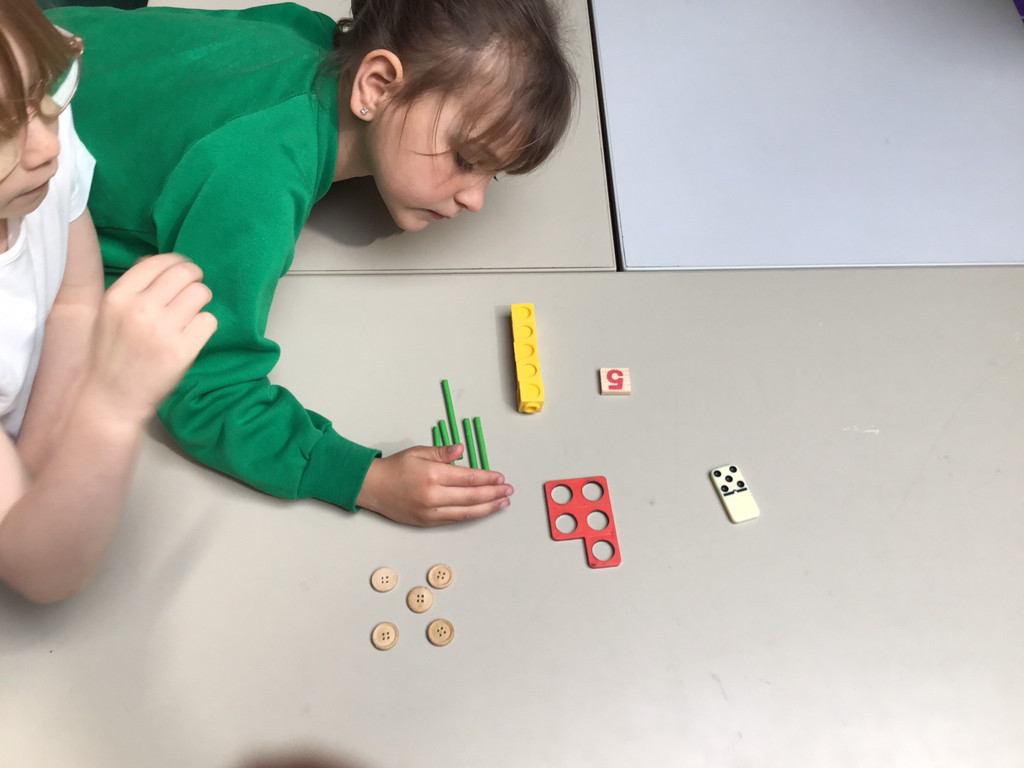
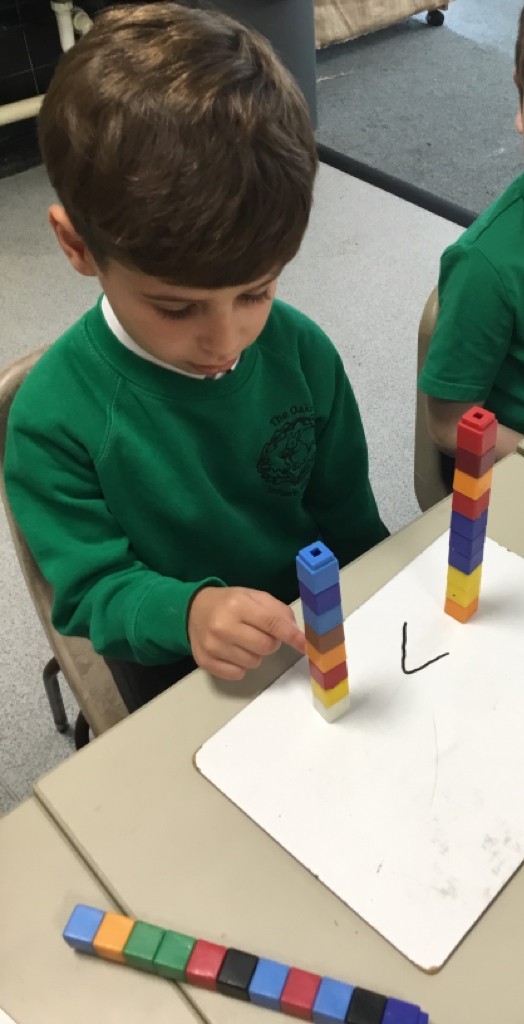
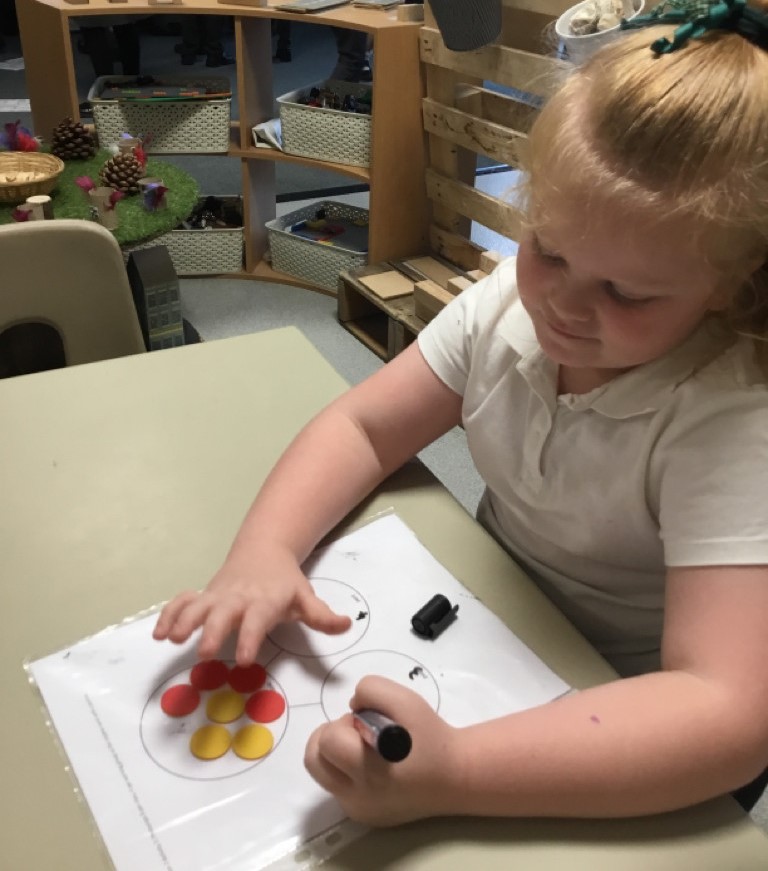
Every lesson can be evaluated against the NCETM’s 5 big ideas for Mastery – Representation and Structure, Variation, Fluency, Mathematical thinking and Coherence. Teachers will use the CPA approach when teaching – moving from the concrete through to pictorial and only then will pupils use abstract representations to record their knowledge. Teachers model precise mathematical language to help the children to then solve more complex worded problems. Mathematical language is taught through the use of stem sentences and, using White Rose Maths small steps, builds year on year. Teachers anticipate and plan for misconceptions, drawing pupils’ attention to ‘what is..what is not’ the concept. These are discussed and probed. For children grasping concepts quickly, teachers will deepen understanding through reasoning and problem solving.
Teaching for mastery diagram.pdfTeachers embed opportunities throughout the day to teach factual fluency eg routines, counting, telling the time etc. Pupils, through the use of White Rose, Numbots and the Mastering number programme, will develop rapid recall of facts, thus freeing working memory to work on more complex mathematical problems. Teachers also teach a range of mental and formal calculation methods which are outlined in the school’s calculation policy.
Coherency flows through everything we do – lesson sequences are planned carefully to work through a journey, developing the big ideas behind mathematical concepts and mapped out in each year group’s long-term plan. Every classroom has an area for mathematical resources that the children can access and are mathematically language rich. In KS1, maths working walls serve as a reminder of key mathematical concepts taught. In our school, every new concept is taught alongside the revisiting of prior knowledge so that children can understand how this new learning fits in with their existing knowledge.
In Nursery, there are three directed sessions per week following the Master the Curriculum Programme. Learning is then followed up through key group time and enhanced in the environment for the children to engage with during child-initiated. Observations are then recorded on Tapestry.
In Reception, children are following the Mastering Number programme, supplemented with further materials from Number Blocks and Development Matters. Children have a 20 minute dedicated lesson four times a week. Number is introduced through the CPA approach and they are encouraged to use Numicon, Numberblocks and real life objects to explore the numbers within numbers. Children in Reception will leave with a good knowledge of number facts to 10. Although shape, space and measure is no longer a standalone Early Learning Goal, spatial reasoning is taught on a termly basis throughout the year in addition to being woven through other aspects of the curriculum and through ChilL.
In KS1, prior learning is taught via Long Term Louis (Y1) and Flashback 4 (Y2). The National Curriculum is covered by following White Rose small steps. No learning is ever capped; for those children who show a good understanding of the Maths that day, a digging deeper challenge is provided. For those children who may find the concepts tricky to grasp, adaptions are made to the planning to provide additional support where needed.
In Year 1, children have 2 longer and 3 shorter sessions of Maths teaching and learning, in which children are introduced to new concepts as a class and then refine their skills in small groups. Group work includes fluency, reasoning and problem solving. Children are also following the Mastering Number programme, which is an additional 15 minute lesson, 3 times a week and focuses on learning key number facts. As well as small group work, children revisit previous objectives through the medium of Continuous Provision. Classroom provocations entice the children to explore different aspects of Maths, thus developing their inquisitive minds and independent learning. In addition, Year 1 have an ever expanding outside area in which the children can explore mathematical concepts.
In Year 2, Children have four teacher led lessons a week. The pace of the lessons is brisk, with teachers constantly asking questions, inviting pupils to demonstrate solutions and quizzing them about their thinking, encouraging correct use of mathematical language. There’s a mixture of short tasks, explanations, demonstration and discussion – and a lot of practise to help reinforce learning. Learning is recorded in White Rose booklets, with additional fluency and challenges recorded in Maths books. Children use the White Rose booklets to support their learning. In addition to the lessons following White Rose small steps, Year 2 are also on the Mastering Number programme which include 4 discrete 15 minute number lessons per week.
Impact
We believe that Maths mastery is a journey that the majority of pupils will be able to complete, at the same pace. In Nursery and Year R, assessment is made 'in the moment' and through carefully chosen activities and resources that the children can access during provision. In KS1, teachers use both formative and summative assessments.
1. Formative assessment - Teachers mark 'in the moment', providing verbal and written feedback and children self correct their work at the time.
2. Summative assessment - Children complete the end of block assessments for each of the White Rose blocks of study. The results of these impact the content of Long Term Louis or the Flashback 4.
Maths in action
NumBots
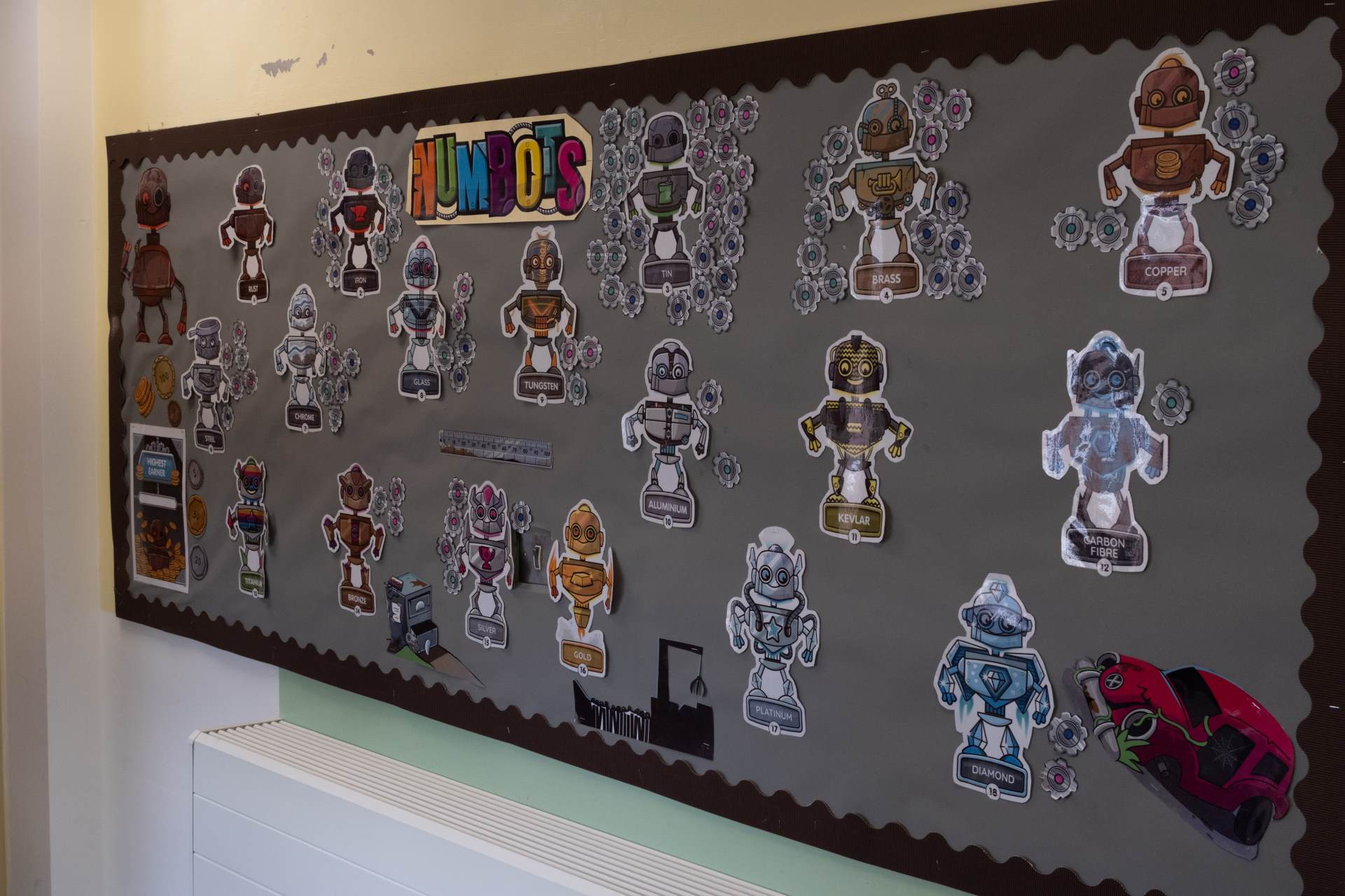
NumBots is an online game, helping children to see the pattern in number and subitise (as we would when we see numbers on a dice – we recognise the pattern without the need to count). It is all about every child achieving the 'triple win' of understanding, recall and fluency in mental addition and subtraction, so that they move from counting to calculating. As they move up through the levels, the game focuses on rapid recall of addition and subtraction facts; as they gain stars, they gain coins which will be able to be seen on their screen and they can customise their very own 'NumBot' by using their coins in the Custom Shack.
Every child has their own login and password and if you need help, please speak to your child's Class Teacher.
NumBots Click here to log in and play!
